
Introduction
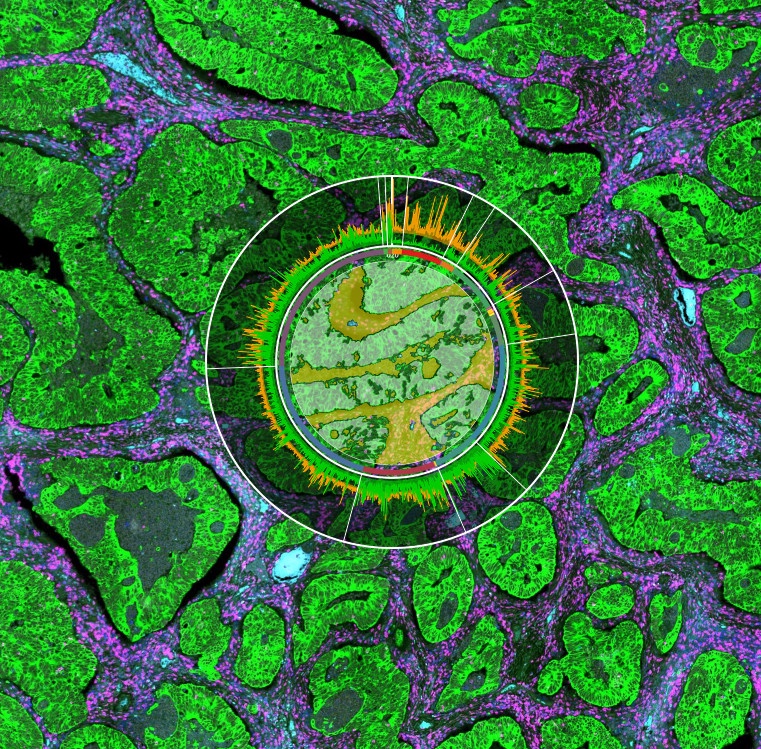
Spatial biology is an emerging field that focuses on the spatial distribution and organization of biomolecules within cells, tissues, and organs. One of the key challenges in spatial biology is to identify and locate specific biomolecules within complex tissue structures. Antibodies are essential tools in spatial biology for identifying and quantifying specific biomolecules in tissues. Antibodies are proteins that recognize and bind to specific target molecules, called antigens. In this essay, we will discuss the use of antibodies in spatial biology tissue identification.
Antibodies and antigen recognition
Antibodies are produced by B cells, which are a type of white blood cell in the immune system. When an antigen enters the body, it is recognized by B cells, which produce antibodies that specifically bind to the antigen. Antibodies are composed of two heavy chains and two light chains, which are arranged in a Y-shaped structure. The tips of the Y-shaped structure are called the antigen-binding sites, which are responsible for recognizing and binding to the antigen.
The specificity of antibodies is determined by the sequence of amino acids in the antigen-binding sites. Each antibody has a unique sequence of amino acids in its antigen-binding sites, which allows it to recognize and bind to a specific antigen. The specificity of antibodies has made them valuable tools in a wide range of applications, including diagnostic assays, therapeutics, and spatial biology. Antibodies have become a standard feature in most wet-labs but and are available from a number of commercial suppliers. The leading suppliers of antibodies in the Multiplex / spatial biology field is Cell Signalling technologies.
Multiplexed assays
Multiplexed assays are techniques that allow multiple biomolecules to be identified and quantified simultaneously in tissues. Multiplexed assays are important in spatial biology because they allow the complex spatial relationships between multiple biomolecules to be studied simultaneously.
Multiplexed assays can be performed using various techniques, including IHC and ISH. In multiplexed assays, multiple primary antibodies or nucleic acid probes are used to identify multiple target biomolecules in the tissue sample. Each primary antibody or nucleic acid probe is labeled with a unique detectable marker, which allows the location of each target biomolecule to be visualized and quantified simultaneously.
Multiplexed assays have been used to study a wide range of biological processes, including cell signaling, gene expression, and disease progression.
Multiplex spatial biology companies are at the forefront of developing technologies that enable the simultaneous detection of multiple biomolecules in tissue samples. This capability has transformed the field of spatial biology, allowing researchers to study the complex spatial relationships between multiple biomolecules and understand the molecular basis of disease.
There are several leading companies in the multiplex spatial biology space, each with its strengths and weaknesses. In this summary, we will discuss the top companies in this field and evaluate their respective strengths and weaknesses.
NanoString Technologies
NanoString Technologies is a leading company in the field of multiplex spatial biology. Their nCounter platform allows researchers to detect and quantify multiple biomolecules simultaneously in tissue samples. The nCounter system uses probes that bind to specific target sequences, which are then labeled with fluorescent probes for detection. This technology allows for the analysis of up to 800 targets simultaneously in a single tissue section.
Strengths: NanoString Technologies has established a strong reputation for developing high-quality products that provide reliable and accurate results. The nCounter system is user-friendly, and the company offers excellent customer support. The platform also has a robust data analysis pipeline, allowing for the easy interpretation of results.
Weaknesses: One of the main weaknesses of NanoString Technologies is the cost of the nCounter system and associated reagents, which may be prohibitively expensive for some researchers. The system also requires relatively large amounts of tissue, limiting its use in applications where tissue availability is limited.
Akoya Biosciences
Akoya Biosciences is a leading company in the field of multiplex spatial biology. Their CODEX platform allows researchers to detect and quantify up to 50 biomolecules simultaneously in tissue samples. The platform uses antibodies labeled with unique DNA barcodes to identify specific biomolecules, which are then imaged using a high-resolution microscopy system.
Strengths: The CODEX platform offers high sensitivity and specificity, allowing for the reliable detection of multiple biomolecules in tissue samples. The system also has a relatively low cost per sample compared to other multiplex spatial biology platforms. Additionally, the company offers excellent customer support and training for users.
Weaknesses: The main weakness of the CODEX platform is that it requires specialized equipment, including a high-resolution microscope, which may be prohibitively expensive for some researchers. The system also requires relatively large amounts of tissue, limiting its use in applications where tissue availability is limited.
Visiopharm
Visiopharm is a leading company in the field of digital pathology and image analysis. Their software platform allows researchers to analyze tissue images and detect multiple biomolecules simultaneously. The platform uses machine learning algorithms to analyze tissue images, enabling the detection of subtle differences in staining intensity and spatial relationships between multiple biomolecules.
Strengths: Visiopharm’s platform is highly flexible, allowing users to customize their analysis workflows to suit their specific research needs. The platform also offers excellent image analysis capabilities, enabling the detection of subtle differences in staining intensity and spatial relationships between multiple biomolecules.
Weaknesses: One of the main weaknesses of Visiopharm’s platform is that it is not a stand-alone system and requires additional hardware and software to perform multiplex spatial biology experiments. The system also requires relatively large amounts of tissue, limiting its use in applications where tissue availability is limited.
Conclusion
Multiplex spatial biology companies are transforming the field of spatial biology, enabling researchers to study the complex spatial relationships between multiple biomolecules and understand the molecular basis of disease. NanoString Technologies, Akoya Biosciences, and Visiopharm are among the leading companies in this field, each with its strengths and weaknesses. Researchers should carefully evaluate each platform’s capabilities and limitations before selecting the most appropriate system for their specific research needs.
 Spatial Biology